Rabu, 15 Mei 2013

Opening Saturday: Modernism's Messengers: The Art of Alfonso and Margaret Iannelli

click images for larger view
It's like the the folks over at the Chicago Cultural Center were trying to keep it a secret, but this Saturday, May 18 at 10:00 a.m. marks the opening of a highly anticipated show on the work of Alfonso and Margaret Iannelli.  Best remembered today for Alfonso's collaboration with Frank Lloyd Wright on Midway Gardens, the Iannelli's actually had over half a century of making interesting art.

The last time I checked, the show was a collaboration between Chicago Cultural Historian Tim Samuelson and scholar and collector David James, author of  a companion book, Alfonso Iannelli: Modern by Design, scheduled to be published this coming July.  (I had the privilege of previewing some of the pages, and it looks to be spectacular.)


No curators are mentioned in the  sketchy information on the exhibition's page on the Cultural Center website, but I can't believe either Samuelson or Jameson had anything to do with the shockingly inane description that manages to say nothing of the qualities of the art but tries to sell the show as some kind of pulpy True Romance . . .
Opening on May 18 and continuing through August 27 in the Chicago Rooms at the Chicago Cultural Center, (78 E. Washington) is Modernism�s Messengers: The Art of Alfonso and Margaret Iannelli � 1910 to 1965.  In this show, one discovers not only the love they both had for modernism, but also the love that they had for each other.

Despite very different backgrounds and very different approaches to life, their work together and apart displayed such a partnership that one could not tell where Alfonso�s work ended, and Margaret�s began.
Yep, that's the entire description.  There's more information on the press release, which reveals near its end the real reason we should find the exhibition interesting. It's because the show . . .
emphasizes a strong tenet of the Chicago Cultural Plan which is attracting and retaining artists. That is a practice in Chicago�s history and a goal of today. Additionally, this exhibit promotes the values and impact of culture and fosters cultural innovation.
Ah yes, heaven is the land of a bureaucrat's non sequiturs.  The Iannelli's lived to confirm the tenets of the Chicago Cultural Plan, apparently now the high point of human evolution.  Along with �the values and impact of culture�� and �cultural innovation�.  And �modernism�. Mustn't forget modernism.  And motherhood, and cuddly bunnies.  Did I mention there might also be some art involved?
Actually, the personal saga of Alfonso and Margaret is a dramatic and poignant story, but if that was all they had going for them, we wouldn't be remembering them now.  The work, ultimately, is what matters, and in the case of the Iannelli's it's fascinating stuff.  I expect to be at the front of the line to check it out on Saturday.  To get you started, here's a couple of our past articles:

Read:
Artist Rediscovered - Alfonso Iannelli: Modern by Design
Iannelli (and Wright) out of the Storeroom

Selasa, 14 Mei 2013

At Raw Point of Spring, a Journey through Chicago and its Architecture, Northern Excursion

click images for larger view (recommended)
Last week, we offered a photographic excursion through the near South Side.  Today, we turn our attention north, to an exploration of the city as a flow of gestures - of construction, of art, of cultivated nature - creating a montage of visual incident in a continuity of ever shifting juxtaposition.

Even when you close your eyes the immersion persists.  You may, willfully, imagine yourself somewhere else, but in the reflections of sound and shadings of light, even through shut eyelids, the character of the exact GPS point at which you stand insinuates that moment of the city into your being.
This is the time of year when the constructed city, again in heat, is set off against rare, raw color, leaves an emergent neon green, branches overrun with blossoms red as an angry newborn's skin.

Continue the journey, after the break . . .


 A Digression, on the last seasons of a once mighty tree . . .


. . . the journey continues . . . 


See Also:
Southern Excursion - a Journey Through Chicago Architecture


Senin, 13 Mei 2013

Hyde Park under Construction: Harper Court, Hyatt Place

click images for larger view
Harper Court, Hyde Park, Hartshorne Plunkard Architecture.  150,000 square feet office; 150,000 square feet retail.

Hyatt Place, Hyde Park, Legat Architects.

Porcelain tile and zinc shingle facade.
Across 53rd, the clunky brick of a former Borders purchased by the U of C was stripped away and given a new facade for a Hyde Park flagship of the Akira chain.

Chicago Streetscene: Evolution

click image for larger view

Sabtu, 11 Mei 2013

Two must-sees, Gatsby (if only for the architecture); Orson Welles' Chimes at Midnight tomorrow at the Music Box

One production had no money; the other had it coming out of its ears.

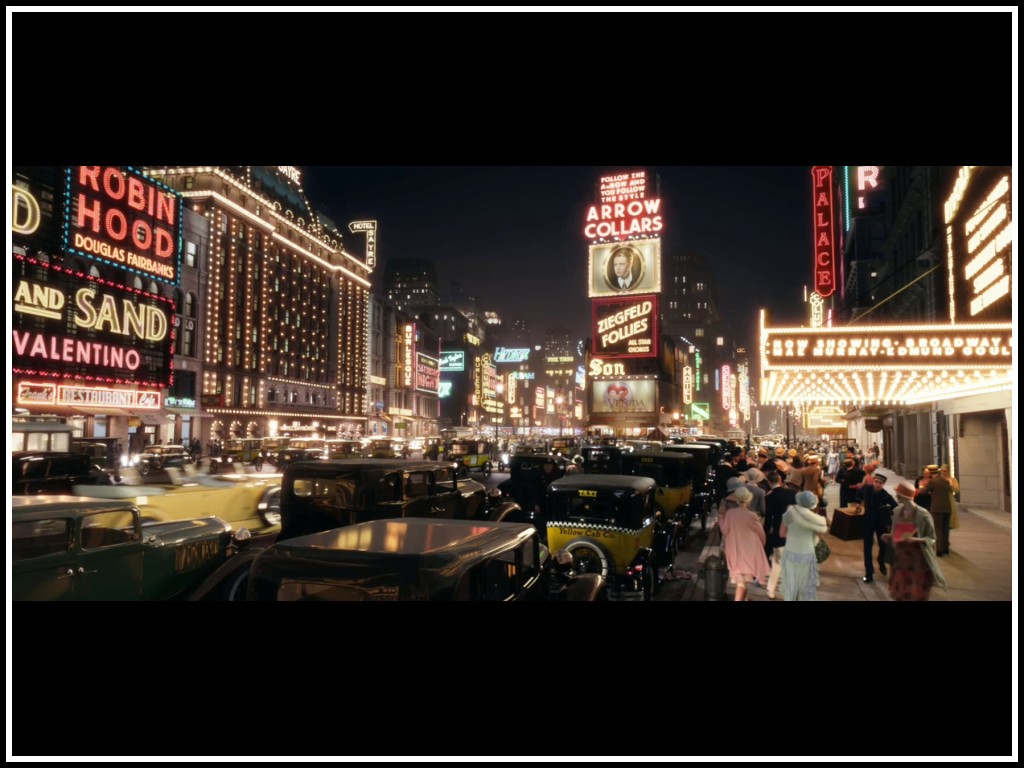
Critics are generally roughing up Baz Luhrmann's new version of F. Scott Fitzgerald's The Great Gatsby, but from an architectural standpoint, if nothing else, Production Designer Catherine Martin's creations are well worth a view.  Watching the film is like gazing at the world through a pair of Walgreen's magnifiers.  Gatsby's doesn't just live in a mansion, but a flapper age Schloss Neuschwanstein.  The party scenes set new records for population density - you get the impression that even Busby Berkeley would have taken one look and said, �too much.�
The CGI recreations of 1920's Manhattan are hyped versions of the originals, but that doesn't make them any less breathtaking.  You want to freeze those shots of Broadway or driving down the street beneath the �L� and just drink them in.  And I don't really have any problem with the mixture of Gershwin and hip-hop on the soundtrack, which, in the words of the film's musical supervisor Anton Monsted, creates �the effect of, almost, sliding doors between very contemporary sounds and sounds that the characters in the film would have heard realistically at the time.�

In a way, it's disorientating, but in this context, it works, just as Luhrmann's breathless editing style works, putting the audience inside of a dizzying time and a dizzying place, a party aboard a runaway train, not unlike the world we find ourselves in today.  I can't say how much of it was intentional, and how much was a happy accident, but the theatrical gestures take you in even as you laugh inwardly at their excess, and, at least for me, the big scenes packed an emotional punch.

A lot of the reviews of Gatsby center on how true the film is to the original novel, which to me is so wrong-headed as to question the capabilities of the reviewer.  Ultimately, whatever its source, a work has to be true, above all, to its medium.   Film as transcript - a �clean� translation - is impossible. Any such attempt winds up only betraying both novel and movie.

The thing I remember most from Jack Clayton's 1974 version of The Great Gatsby, with Robert Redford and Mia Farrow, is the scene between Sam Waterson's Nick Carraway and the ineffable Roberts Blossom as Gatsby's father.  Without a single flashback, it evokes Gatsby's origins, the gray working-class reality he so desperately wanted to escape, with a palpable sense of mingled dread, unease and regret. 

That scene didn't make the cut for Luhrmann's Gatsby, which, in contrast, is like a speeding skiff skipping along the surface of the water.  You get drawn into the frenetic energy of the big parties at Gatsby's mansion and lifestyle.  You feel like you've fallen into a perpetual motion machine set at warp speed.  It's the ketchup in which Luhrmann often drenches his films, but in the context of this story, it's pretty much a perfect fit.  Where is it leading, what is its purpose, how do I get off?  You're left anxious and a bit exhausted even as you're enthralled.

When you enter the old-money world of the Buchanans it's like falling off the merry-go-round into a dead-stop lock-step, all actions predetermined and proscribed. Catherine Martin's evocation of the surreal, slough-of-despond ash heap, the hard labor zone of filth and despair between the mansions of Long Island and an enchanted Manhattan, is the nightmare of what lies beneath, the brutal chaos that the unseeing beautiful people race across to keep from falling in.  Except they do.

But before they do, fatally, we get to The Great Gatsby's heart, to the deep, obsessive longing at the center of the mass-manufactured pretense, and here Luhrman slows down the pace, and allows the essential points to be made.

To be sure, there's no shortage of idiosyncrasies in Luhrmann's vision, in which Fitzgerald's distinctively American world seems populated largely with Australians, and a gangster named Meyer Wolfsheim is played by the great Indian film star Amitabh Bachchan. 

Thinking of Luhrmann and his over-the-top Gatsby, I can't help but think of Oscar Levant's famous remark, �There's a fine line between genius and insanity.  I have erased this line.�

You may love it, you may hate it, but I think The Great Gatsby is something you don't want to miss. Make sure you see it in 3-D.
This Sunday, May 12th, you can encounter filmmaking of an entirely different dimension.  Chimes of Midnight is one of Orson Welles' lesser known works, but an enthralling masterpiece.  Like Luhrman, Welles - was he the real life Gatsby? -  loved pushing the envelope with high-tech flourishes, but the tenuous budget of Chimes left little room for them, and as a result the film speaks directly to the heart, with an improvisatory freshness.  It's a film of epic reach and touching intimacy, and if you head out to the Music Box for Sunday's 11:30 a.m. showing, you won't regret it.

Jumat, 10 Mei 2013

Southern Excursion - a Journey through Chicago Architecture

click images for larger view
Madeleine: ...And what do you do, John?
Scottie: Oh, just wander about.
Madeleine: That's a good occupation.
A beautiful spring day in Chicago is pointless to resist, and so I found myself on my way to Ping Tom Park, my only deliberate destination.  Beyond that, I wandered, letting the streets with the great names  - Emerald, Normal, Lumber - angling and meandering along the river, lead me through a complex city, a working city.  Not the carefully contrived center, but a less planned, more organic architectural chronicle of birth, development, decay, and death or resurrection - pick your door and take your chances.  There's more true history in Bridgeport and Pilsen than in the Loop - they're at a sweet spot remove where developers less often see dollar signs in their eyes contemplating high-rises where old buildings now stand.  No empires are being built here, just life lived day-to-day, in an urban fabric that's endlessly diverse and fascinating, and, at places raw or refined, poignantly beautiful.